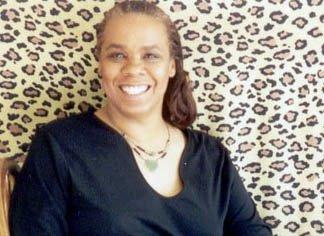
My name is Cozy... well that is what some call me. My name is DeBorah and thank you for stopping by. I Love Company. I just wanted to share a few things... mostly my poetry... with you. Tell me if you like any of them AND Have a great 2010!
Crime touches the lives of families everywhere. When a man goes to prison, the rest of his family goes to prison also. Although the instrument of the family’s confinement is not made of concrete and steel, it is a structure society has fashioned out of stereotypes, judgments and guilt and the punishment and mental anguish inflicted proves to be just as bona fide as a 9 x 12 foot cell without windows. Having a loved one in prison brings with it a scarlet letter of shame that family members wear to school, work, church and the supermarket – not to mention the anxiety and internal anguish they face.
In 1996, a good friend of mine and I were talking when he revealed to me that he had gone to prison for three years for burglary. This man is a college graduate; successful employee and a person whom I never would have thought had that type of a history. He was in his mid-thirties with one child he was having trouble getting visitation rights to. The reason for his troubles was because of his previous prison time. But Up until this point, I had known no one who had ever been to prison or who even told me they knew someone who had been in prison. My friend was telling me all of the struggles his family went through while he was behind bars, their embarrassment, their guilt, their feelings of victimization. My friend put me in touch with other men behind bars and I started talking to their families and it was then that I realized there was a whole different culture of people out there and my curiosity of them culture became more.
I have researched and interviewed some families who presently have a loved one who is incarcerated. I have listened to their voices, often times from behind the barbed wire fences of a prison visiting room, and am sharing these voices in the form of stories and poems. Click on a flame to read one of them. The population that I interviewed was the families of black men.
Little changes about prisons; the sights are the same, the sounds are the same and many times so are the faces returning time and time again. With the projection of another 7,000 black men headed to prison, there needs to be some answers as to what can be done to stop this. An estimated 70% of California’s paroled felons reoffend within 18 months—the highest recidivism rate in the nation (Petersilia, 1999). Parole violators now exceed new commitments. The majority of inmates leave prison without savings, without immediate entitlement to unemployment benefits, and with poor prospects for employment. Survey data indicate that one year after being released, as many as 60% of former inmates are not employed in the regular labor market (Mumola, Pg 12). Moreover, in recent years California has barred parolees from employment in law, real estate, medicine, nursing, physical therapy, and education, which has reduced the number of occupations in which parolees can work (Petersilia, 1999). Furthermore, the aggravation of not being able to acclimatize back into a community puts pressure on the marriage and divorce is the result. Estimates of three in four marriages end in divorce within the first year of parole. (Silverman, Pg 3) Personally, I also feel that more drug offenders should be diverted to drug-treatment program rather than prisons. Furthermore, there should be mentoring programs for children of prisoners as well as programs that help to mend broken families.
It is my hope that an increase awareness develops within the child welfare community, including child welfare system administrators, foster care caseworkers, child protective services caseworkers, foster parents and casework staff trainers as well as family court judges, child advocates, substance abuse treatment providers and criminal justice professionals. With the “hidden victims” culture growing in this country, awareness must be made of these families Doing Time On The Outside.
Petersilia, Joan. Parole and Prisoner Reentry in the United States. edited by M. Tonry and J. Petersilia. Chicago, Ill.: University of Chicago Press. 1999
Mumola, Christopher J. Department of Justice. Office of Justice Programs. Incarcerated Parents and their Children. Washington: GPO 2000
Silverman, Ira J. Corrections: A Comprehensive View. 2nd ed. California; Wadsworth, 2001